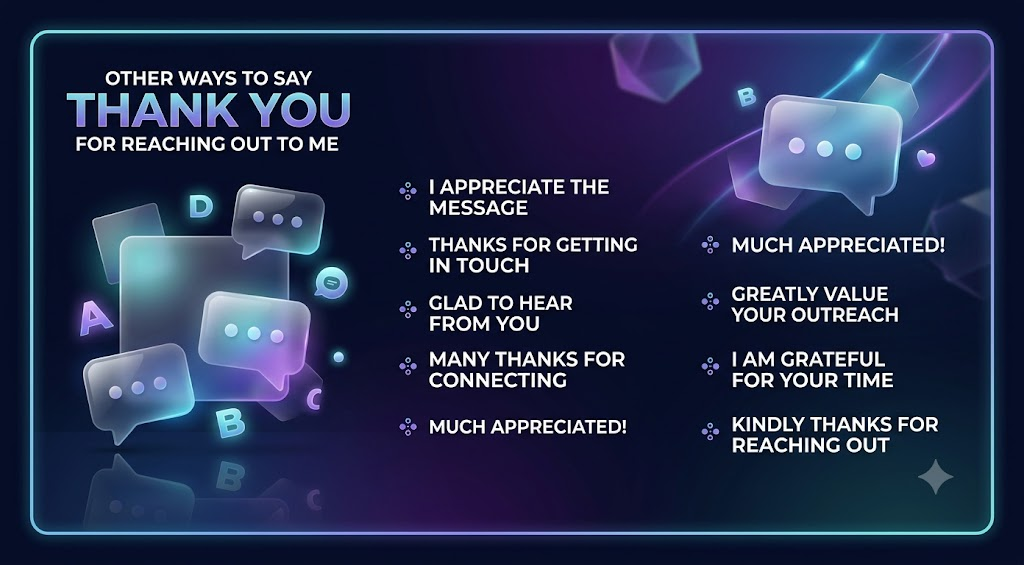
Communication plays an important role in building personal and professional relationships. Whenever someone contacts you, showing appreciation helps create a positive impression and encourages future conversations. Learning Other Ways To Say Thank You For Reaching Out To Me allows you to sound more natural, thoughtful, and engaging instead of repeating the same phrase every time.
Whether you receive a message from a friend, coworker, client, or family member, your response can strengthen trust and respect. Different situations call for different expressions of gratitude. This guide explores polite, friendly, formal, and creative alternatives that fit a variety of conversations while helping you communicate with confidence.
Why Expressing Gratitude Matters
Saying thank you is more than just good manners. It acknowledges the effort someone made to contact you and lets them know their message is appreciated. Even a simple response can make another person feel valued and respected.
Using different expressions also keeps your conversations fresh and genuine. Instead of relying on the same sentence repeatedly, choosing words that match the situation creates a warmer connection and leaves a memorable impression on the other person.
When to Use Different Thank You Responses
Every conversation has its own tone. A message from your manager deserves a different response than a text from your best friend. Understanding the context helps you select the most appropriate phrase without sounding too casual or overly formal.
Professional conversations often require respectful wording, while personal chats allow more warmth and humor. Choosing the right expression shows emotional intelligence and improves your communication skills in both everyday and business interactions.
Formal Alternatives
When responding to colleagues, clients, supervisors, or business contacts, professional language is often the best choice. Here are several formal alternatives you can use with confidence.
Thank you for getting in touch.
I truly appreciate your message.
Thank you for contacting me.
I appreciate you taking the time to reach out.
Thank you for your thoughtful communication.
I’m grateful for your message.
Thank you for connecting with me.
I sincerely appreciate your interest.
These phrases maintain professionalism while expressing genuine appreciation.
Friendly Alternatives
Friends and family usually appreciate warm, casual responses. Friendly wording makes conversations feel comfortable and authentic without sounding overly serious or rehearsed.
You can say, “Thanks for checking in,” “I’m so glad you reached out,” “Thanks for thinking of me,” “I really appreciate hearing from you,” or “It was great getting your message.” These responses feel natural and strengthen personal relationships.
Warm and Heartfelt Responses
Sometimes someone reaches out during a difficult period or simply wants to offer support. In those situations, heartfelt gratitude creates a stronger emotional connection and lets them know their kindness truly mattered.
You might respond with, “Your message means a lot to me,” “I truly appreciate your kindness,” “Thank you for being there,” “Your support is deeply appreciated,” or “I’m thankful you took the time to contact me.” These responses express sincere appreciation.
Professional Email Examples
Professional emails should remain polite, concise, and respectful. Choosing clear language demonstrates professionalism while maintaining a positive relationship with clients, coworkers, or business partners.
For example, you might write, “Thank you for reaching out regarding this matter. I appreciate your message and look forward to discussing it further.” This response sounds courteous while encouraging continued communication.
Casual Text Message Responses
Text messages usually require shorter and more relaxed replies. Keeping your response simple makes the conversation feel natural while still expressing appreciation for the other person’s effort.
Examples include “Thanks for reaching out,” “Great hearing from you,” “Thanks for checking on me,” “Really appreciate your message,” or “I’m glad you got in touch.” These responses are friendly without being overly formal.
Creative Ways to Show Appreciation
Adding creativity to your response helps your message stand out. A thoughtful or unique reply often feels more memorable than a generic thank-you phrase used repeatedly.
Consider saying, “Your message brightened my day,” “I’m happy you thought of me,” “I’m grateful we connected,” “Thanks for making time to reach out,” or “Your message couldn’t have come at a better time.” These alternatives feel fresh and genuine.
Responses for Customer Service
Businesses should always respond professionally when customers make contact. Expressing gratitude shows customers they are valued and encourages stronger long-term relationships with the brand.
You could say, “Thank you for reaching out to our team,” “We appreciate your inquiry,” “Thank you for contacting us today,” or “We’re grateful for the opportunity to assist you.” These responses create a welcoming customer experience.
Social Media Responses
Social media conversations often require friendly and engaging replies. Showing appreciation publicly encourages positive interactions and builds stronger connections with followers and online communities.
Responses like “Thanks for reaching out,” “I appreciate your comment,” “Thank you for your support,” “So glad you connected,” or “Thanks for joining the conversation” keep discussions positive and inviting.
Responses During Difficult Times
When someone reaches out during challenging moments, acknowledging their compassion is especially meaningful. Your gratitude lets them know their support has provided comfort and encouragement.
You can reply with, “Thank you for your thoughtful message,” “Your support means everything right now,” “I truly appreciate your kindness,” or “Thank you for keeping me in your thoughts.” These responses express genuine appreciation during emotional situations.
Mistakes to Avoid
While expressing gratitude is important, some common mistakes can reduce the impact of your response. Avoid sounding robotic by repeating identical phrases in every conversation without considering the context.
Also avoid responses that are too short, overly dramatic, or unrelated to the message received. Matching your tone to the situation creates a more authentic interaction and helps maintain meaningful communication.
Tips for Choosing the Best Response
Always consider who contacted you before selecting your reply. The relationship, purpose of the message, and communication platform all influence which expression feels most appropriate.
Keep your response genuine, concise, and positive. Personalizing your gratitude whenever possible makes the conversation more memorable and demonstrates that you truly appreciate the person’s effort to connect with you.
Best Situations for Using Different Expressions
Different phrases work better in different circumstances. Formal alternatives suit business emails, interviews, networking events, and workplace conversations where professionalism is expected and appreciated.
Friendly responses fit texts, social media, family chats, and conversations with close friends. Heartfelt expressions are especially meaningful when someone offers emotional support, encouragement, or assistance during important life moments.
Examples of Natural Conversations
Imagine a friend sends a message asking how you’re doing. You could respond, “I’m so glad you reached out. It really made my day.” This feels warm and encourages the conversation to continue naturally.
If a client contacts you about a project, you might reply, “Thank you for getting in touch. I appreciate your message and look forward to working with you.” The response remains polite while maintaining professionalism.
Conclusion
Learning Other Ways To Say Thank You For Reaching Out To Me helps you communicate with confidence, warmth, and professionalism in every situation. Whether you’re responding to friends, colleagues, customers, or loved ones, choosing the right words shows respect and appreciation.
Instead of relying on one repetitive phrase, use a variety of thoughtful alternatives that match the tone of each conversation. Genuine gratitude strengthens relationships, improves communication, and leaves a lasting positive impression on everyone who reaches out to you.