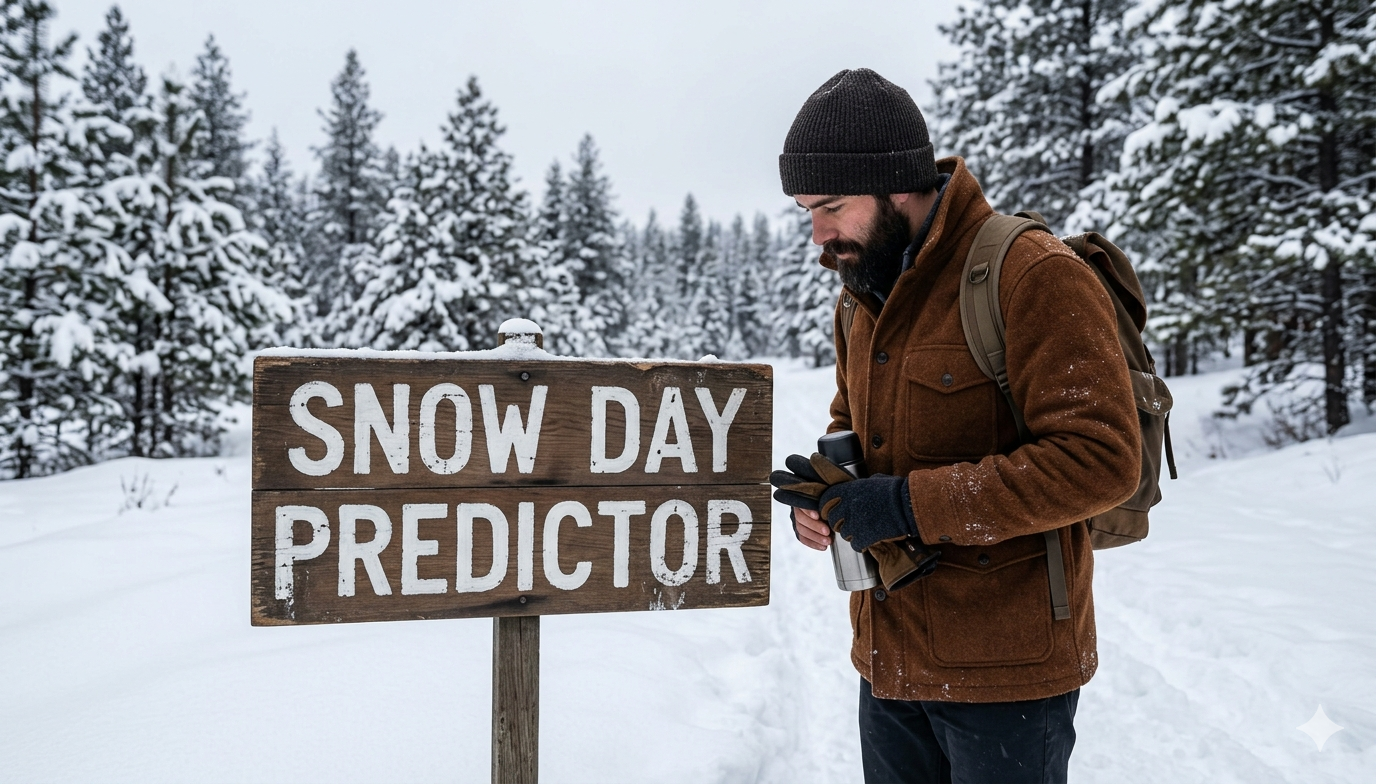
Winter has always carried a sense of excitement, especially for students and families hoping for an unexpected break from routine. The anticipation of school closures due to heavy snowfall has historically relied on radio announcements, television updates, or simply looking out the window. However, the evolution of technology has transformed this experience entirely. Today, digital tools and forecasting models have stepped in to provide more accurate insights, making the process less uncertain and far more engaging.
Among these advancements, the concept of a Snow day predictor has gained widespread attention. It represents a blend of meteorological science, data analysis, and user-friendly interfaces that allow individuals to estimate the likelihood of school closures. This shift highlights how technology continues to integrate into everyday decisions, even those as simple as wondering whether to set an alarm for the next morning.
Understanding How Weather Forecasting Has Evolved
Weather forecasting has come a long way from traditional observation methods. In the past, predictions were largely based on patterns, historical trends, and manual data collection. While these methods offered some reliability, they often lacked precision. With the introduction of satellites, radar systems, and advanced computer models, forecasting has become significantly more accurate.
Modern systems analyze atmospheric pressure, temperature fluctuations, wind patterns, and precipitation levels in real time. These data points are processed through algorithms that can predict weather conditions with impressive detail. As a result, tools like a Snow day predictor are able to leverage this data and present it in a simplified format that anyone can understand.
This transformation has not only improved accuracy but also accessibility. People no longer need specialized knowledge to interpret complex weather charts. Instead, they can rely on intuitive platforms that translate scientific data into practical outcomes.
The Science Behind Predicting School Closures
Predicting a snow day involves more than just measuring snowfall. Several factors come into play, including road conditions, temperature, timing of the storm, and local infrastructure. For instance, a heavy snowfall overnight may lead to closures, while the same amount during the day might not have the same impact if roads are quickly cleared.
A Snow day predictor takes these variables into account by using weighted algorithms. These algorithms consider both meteorological data and regional characteristics. Areas with efficient snow removal systems may remain operational despite significant snowfall, while regions less equipped to handle winter conditions may close schools with even moderate accumulation.
Timing is another crucial factor. Snowfall that begins early in the morning can disrupt transportation and increase the likelihood of closures. Conversely, snow that starts later in the day may not affect school schedules as drastically. By analyzing these patterns, predictive tools offer a more nuanced understanding of potential outcomes.
Why Students and Parents Rely on Digital Predictions
The excitement surrounding potential snow days has always been part of winter culture. For students, it represents a break from routine, while for parents, it often requires quick adjustments to daily plans. In this context, having access to reliable predictions can make a significant difference.
A Snow day predictor provides a sense of preparedness. Instead of waiting for last-minute announcements, families can plan ahead based on probability estimates. This is particularly useful for working parents who need to arrange childcare or adjust their schedules.
Moreover, these tools add an element of engagement. Many platforms present predictions in a fun and interactive way, often using percentages or countdown-style displays. This not only makes the experience enjoyable but also encourages users to learn more about how weather impacts daily life.
The Role of Data and Machine Learning
One of the key drivers behind the effectiveness of modern prediction tools is the use of data and machine learning. By analyzing historical weather patterns alongside current conditions, these systems can identify trends and improve their accuracy over time.
Machine learning algorithms continuously refine their predictions based on new data. For example, if a particular region consistently closes schools under certain conditions, the system will adapt to reflect that pattern. This dynamic approach ensures that predictions remain relevant and reliable.
A Snow day predictor benefits greatly from this technology. It is not a static tool but an evolving system that becomes more accurate with each use. This adaptability is what sets it apart from traditional forecasting methods and makes it a valuable resource for users.
Limitations and Challenges of Predictive Tools
Despite their advantages, predictive tools are not without limitations. Weather remains inherently unpredictable, and even the most advanced systems can encounter inaccuracies. Sudden changes in temperature or unexpected shifts in storm patterns can alter outcomes significantly.
Additionally, school closure decisions are influenced by human judgment. Administrators consider factors such as safety, transportation logistics, and community conditions. While a Snow day predictor can provide estimates, it cannot account for every variable involved in decision-making.
There is also the challenge of over-reliance. Users may place too much trust in predictions and overlook official announcements. It is important to remember that these tools are meant to supplement, not replace, authoritative sources of information.
How Communities Benefit from Better Predictions
Improved forecasting tools have a broader impact beyond individual convenience. Communities as a whole benefit from better preparedness and resource allocation. For example, local authorities can plan snow removal efforts more effectively when they have access to accurate predictions.
Schools can also make more informed decisions, reducing last-minute disruptions. By anticipating weather conditions, administrators can communicate with families earlier and ensure smoother transitions during winter events.
A Snow day predictor contributes to this ecosystem by providing accessible information to the public. When individuals are better informed, they can make decisions that align with community efforts, ultimately enhancing overall safety and efficiency.
The Future of Weather-Based Decision Tools
As technology continues to advance, the capabilities of predictive tools are expected to grow even further. Integration with real-time data sources, improved machine learning models, and enhanced user interfaces will likely make these tools even more accurate and user-friendly.
Future developments may include personalized predictions based on specific locations, travel routes, or individual schedules. This level of customization would make tools like a Snow day predictor even more relevant to everyday life.
Additionally, the incorporation of artificial intelligence could enable more sophisticated analyses, taking into account a wider range of variables. This would not only improve accuracy but also expand the scope of what these tools can achieve.
Balancing Technology with Real-World Awareness
While digital tools offer significant advantages, it is essential to maintain a balance between technology and real-world awareness. Observing local conditions, staying informed through official channels, and using common sense remain crucial aspects of decision-making.
A Snow day predictor should be viewed as a helpful guide rather than a definitive answer. By combining its insights with other sources of information, users can make more informed and confident decisions.
This balanced approach ensures that technology enhances, rather than replaces, human judgment. It also encourages users to remain engaged with their surroundings, fostering a deeper understanding of how weather impacts daily life.
Conclusion
The evolution of weather forecasting has transformed the way people anticipate and respond to winter conditions. What was once a guessing game has become a data-driven process, offering greater accuracy and convenience. Tools designed to predict school closures exemplify this progress, providing valuable insights in an accessible format.
The growing popularity of the Snow day predictor reflects a broader trend toward integrating technology into everyday experiences. While it is not without limitations, its ability to combine scientific data with user-friendly design makes it a valuable resource for students, parents, and communities alike.
As advancements continue, these tools will likely become even more sophisticated, further enhancing their role in daily life. By embracing both technological innovation and practical awareness, individuals can navigate winter seasons with greater confidence and preparedness.